

law of cause and effect : ค้นหาหนังสือธรรมะ หน้า 80 / 1
หน้าหนังสือทั้งหมด
40
Understanding Dhammakāya in Aṅgāṇā-sutta
In brief, contemporary academics refer to the term dhammakāya in the Aṅgāṇā-sutta either as a noun or an adjective. As a noun, the term is interpreted mostly as the Buddha’s teachings collected togeth
The term dhammakāya is interpreted in contemporary academia as both a noun and an adjective. As a noun, it denotes the Buddha’s teachings, while as an adjective, it refers to the nature of the Tathāga
52
Understanding the Noble Eightfold Path and Threefold Path in Buddhism
[Right concentration, again, becomes the basis of right views, right aspirations, and other steps of the noble eightfold path, which is now experienced on a higher level, and this spiral-like progress
This text elaborates on the interrelationship between Right Concentration, Right Views, and Right Aspirations as pivotal elements of the Noble Eightfold Path leading to liberation. It discusses the sp
60
Understanding Dhammakāya: The Essence of Transcendental Dhamma
Arhatship (arahattamagga).86 Therefore, the particular path is not a mere ‘collective title’ of the path-constituents but the ‘essential totality’ by which a ‘body’ is defined.
The dependence of funct
This text discusses the concept of Arhatship and the definition of Dhammakāya in the context of Buddhist philosophy. It argues that the path should be seen as an essential totality, forming a 'body,'
67
Understanding Dhammakāya in Relation to Paccekabuddhas and Enlightenment
early texts that 'dhammakāya' must be singular. 100 In any case, the verse conveys the meaning that a Paccekabuddha has dhamma(s) as his body (or bodies), where 'dhammas' refers to the qualities perta
This study analyzes the term 'dhammakāya' and its relation to enlightenment. Dhammakāya is presented as a singular concept applying to both the Buddha and Paccekabuddhas, emphasizing that 'dhamma' ref
72
Understanding the Levels of Dhammakāya and Noble Disciples
In regard to the different levels of dhammakāya, the canon talks about the different states of trainees (sekha) and non-trainees (asekha). The former refers to states in which a further course is yet
The text elaborates on the different levels of dhammakāya, categorizing trainees and non-trainees based on their qualities and practices. Trainees are seen as individuals who still have further course
76
Understanding the Terms Kevala and Dhammakāya in Buddhist Texts
Generally, the term ‘kevala’ is translated either as ‘only’ or ‘entirely.’ It is observed that, whenever the term appears together with another word that conveys the meaning of ‘emanating,’ ‘illuminat
This text explores the interpretation of key Buddhist terms such as 'kevala', which denotes 'only' or 'entirely', particularly in contexts associated with illumination. The term 'dhammakāya', often li
82
Interpretations of Dhammakāya in Pali Commentaries
In addition to the above two commentators, Upasena and Buddhadatta141 are also Pali commentators who lived around the same times.142 Upasena agrees with Buddhagōsha in regard to his interpretations of
The text discusses the interpretations of the term 'dhammakāya' by various Pali commentators, focusing on Upasena and Buddhadatta, who align with Buddhagōsha, and their views on the Buddha's qualities
124
Meditation Practices Introduced by An Shigao in Eastern Han China
What kind of meditation did An Shigao introduce into Eastern Han China?
An Shigao and other Central Asian translators were welcomed into Eastern Han China (25-220 CE), by the cultured elites who were
An Shigao, notable for his translations, played a key role in introducing meditation practices to Eastern Han China (25-220 CE). The prevalent form during this period was breathing meditation, particu
16
Understanding Reproductive Kamma
Kamma causes reproductive act, a final phase of life before departing this present world or a final idea or mind that is attached to is called reproductive kamma.
If one has an idea on merits when on
Reproductive kamma represents the final thoughts and mental conditions one experiences before departing this world. A positive focus on merits and virtues leads to a better state of mind and body, whi
251
หลักฐานธรรมในคัมภีร์พระธรรม
หลักฐานธรรมในคัมภีร์พระธรรมนั้น 1 ฉบับประชาชน
Harrison, Paul M. 1990. The Samādhi of direct encounter with the Buddhas of the present: an annotated English translation of the Tibetan version of the P
เนื้อหานี้นำเสนอการสำรวจหลักฐานธรรมในคัมภีร์พระธรรมโดยการอ้างอิงงานศึกษาที่สำคัญเกี่ยวกับ Dhamma-kāya และความสัมพันธ์ระหว่างมันกับการบรรลุ enlightenment งานที่สำคัญเช่น เพื่อบันทึกการพัฒนาและการประยุก
40
The Existence of the Soul in Dreams
' Not so, Master Kassapa. '
' So they who are living do not see the soul of you who are living entering or leaving you (when you dream ). How then will you see the soul of a dead person entering or le
In a profound dialogue, Master Kassapa discusses the nature of the soul with a prince who doubts its existence. The prince questions why living beings cannot perceive souls entering or leaving. He pre
46
Understanding Perception and Existence
He has sight and there are forms, but the organ does not perceive them ; he has hearing and there are sounds, but the organ does not perceive them ; he has smell and there are odours, but the organ do
This text discusses the idea that while humans have sensory organs for sight, sound, smell, taste, and touch, these organs do not necessarily imply the perception of a broader reality. The speaker, Ma
70
Exploring Beliefs and Opinions in Life and Beyond
This Life Next Life
68
' Even like the simile of the gamester, Prince, methinks is what you say. Renounce, Prince, this evil set of opinions, renounce them, I say ! Let them not be long a source of
In this passage, Prince Payasi grapples with the ideas of renouncing certain beliefs about existence and the afterlife as presented by Master Kassapa. Despite being advised to let go of detrimental op
84
The Rebirth of Prince Payasi and the Venerable Gavampati
33 Now at that time the venerable Gavampati15 used frequently to go for siesta to the empty mansion of the Acacia. And Payasi, now one of the gods, came up to him and, saluting him, stood on one side.
In this narrative, the venerable Gavampati often retreats to an empty mansion for meditation. He encounters Prince Payasi, who acknowledges his past disbelief in the afterlife and explains his transfo
98
Understanding Worthy and Unworthy Gifts
This Life Next Life
96
Asappurisadanasutta
Bhikkhus, these five are unworthy gifts.
What five ?
Giving disrespectfully,
giving without heart and thought,
not giving with one's own hand
The Asappurisadanasutta discusses the nature of giving, categorizing gifts into two types: unworthy and worthy. Unworthy gifts are defined as those given disrespectfully, without genuine intent, not g
113
หลักฐานธรรมภายในคัมภีร์พุทธโบราณ ๑ ฉบับรวมงานวิจัยโดยอ้อ
หลักฐานธรรมภายในคัมภีร์พุทธโบราณ ๑ ฉบับรวมงานวิจัยโดยอ้อ
Answer: Because the beings have āpatti, [from that they] cannot see even though Buddha-s and Bodhisattva-s come. In addition, Buddha’s dharmak
บทความนี้สำรวจหลักธรรมที่ถูกบันทึกในคัมภีร์พุทธโบราณ โดยกล่าวถึงการที่ beings ไม่สามารถเห็นพระพุทธเจ้าได้เนื่องจากกรรมที่มีอยู่ หากใจไม่บริสุทธิ์ โดยมีการอ้างอิงถึงพระพุทธเจ้าที่ส่งแสงนำทาง แต่การเห็น
206
พระพุทธศาสนามหายานและงานวิจัยเกี่ยวกับพุทธศาสนา
อภิิชย์ โพธิ์ประสิทธิ์ศาสตร์. (2539) พระพุทธศาสนามหายาน. พิมพ์ครั้งที่ 4. กรุงเทพฯ: สภาการศึกษามหามกุฎราชวิทยาลัย มหาวิทยาลัยพระพุทธศาสนา
Bizot, François. 1976. *Le Figuier à Cinq Branches, Recherche
บทความนี้สำรวจการศึกษาเกี่ยวกับพระพุทธศาสนาและภูมิศาสตร์การพัฒนาที่สำคัญ มีการกล่าวถึงเอกสารสำคัญรวมถึงผลงานการวิจัยที่สำคัญในด้านพุทธศาสนา เช่น ธรรมมะและความสำคัญของพระพุทธศาสนาในโลกสมัยใหม่ผ่านมุมมอ
208
Pali Texts and Commentaries
VoIs.1-2, eds. Max Walleser and Hermann Kopp. London: Luzac&Company, Ltd, 1924-1930; Vols. 3-5, ed. Hermann Kopp. Oxford: The Pali Text Society, 1936-1957.
Nettipakarana with Extracts from Dhammapāla
This document provides a detailed listing of significant Pali texts, their editions, and the editors involved in their publication. The Pali Text Society has played a crucial role in preserving and di
14
Sappurisadana Sutta: Gifts of a Person of Integrity
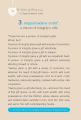
3. Sappurisadana Sutta8 :
A Person of Integrity's Gifts
"These five are a person of integrity's gifts.
Which five?
A person of integrity gives a gift with a sense of conviction.
A person of integrity
The Sappurisadana Sutta describes five essential gifts that characterize a person of integrity. These gifts include giving with conviction, attentiveness, in an appropriate time, with empathy, and wit
26
The Virtue of Almsgiving
26
The Virtue of Almsgiving
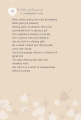
5. Chalaṅgadāna Sutta
Even before giving the mind is pleased,
while giving is pleased,
Having given is pleased, this is the
accomplishment in giving a gift.
Th
The Chalaṅgadāna Sutta outlines the significance of almsgiving, highlighting how the act of giving brings joy both before, during, and after the act. It emphasizes that those who lead a restrained and